Practical Renovation Priorities for Rustic Portuguese Homes
You've found it. A stone cottage near Castelo Branco, or perhaps a schist house tucked into a hillside in the Serra da Lousã. The photos looked romantic. The reality involves a leaking roof, wiring from 1974 and a kitchen that consists of a fireplace and a stone sink.
Where do you start? That question keeps more new owners awake than the cost itself. Get the order wrong and you'll be ripping out beautiful new plasterwork eighteen months later because the damp came through. Get it right and each stage builds on the last.
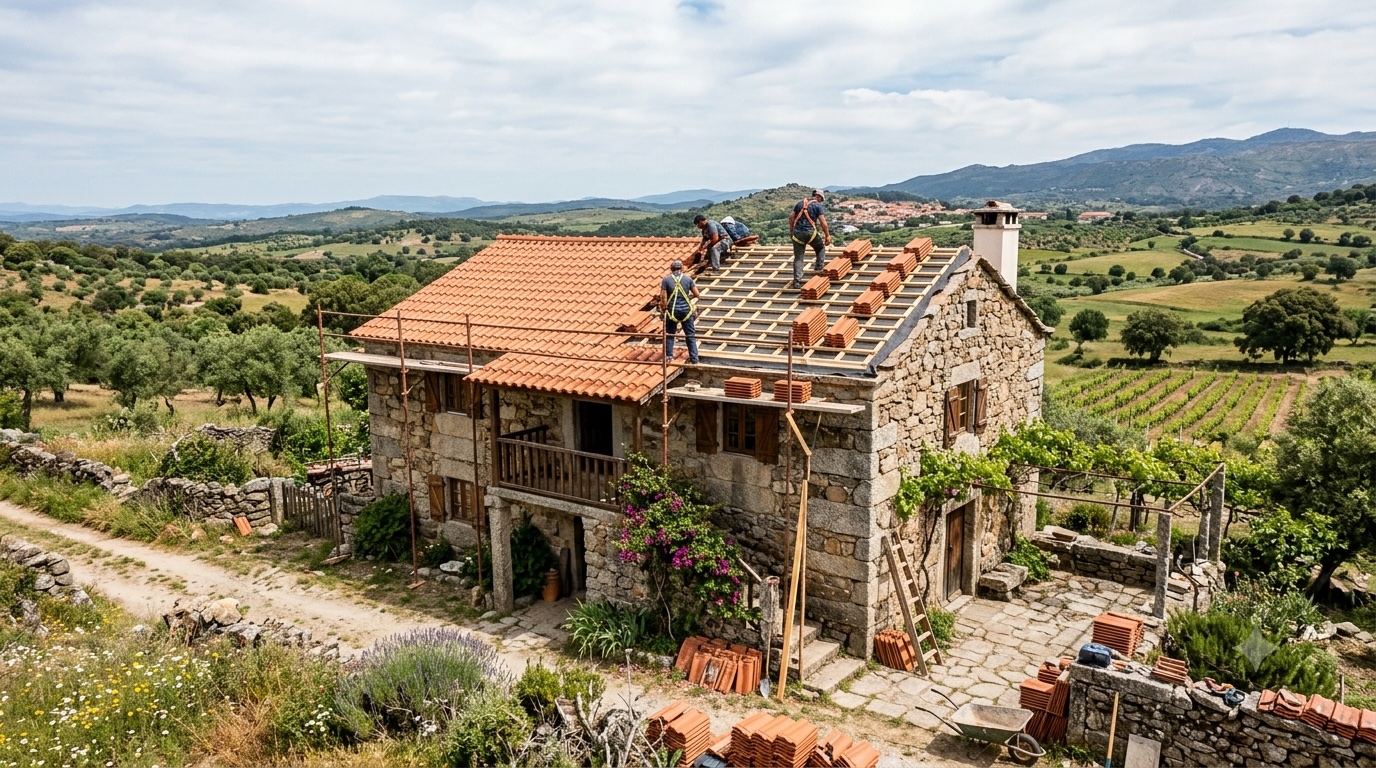
Roof First, Always
Nothing else matters if water is getting in. Portuguese rural properties typically have terracotta tiles laid over timber battens, often with no membrane at all. Wind-driven rain from the Atlantic finds every gap, and the winter storms in Beira Baixa or the Minho are far wetter than most British buyers expect.
Strip the tiles, check every rafter and purlin, and treat or replace anything with woodworm or rot. Portuguese pine holds up reasonably well, but chestnut beams in older properties can look solid and crumble under a screwdriver.
A full re-roof on a modest 90 square metre cottage generally lands somewhere between €8,000 and €15,000 depending on whether you reuse the original tiles. Reusing them is worth the effort; new terracotta rarely matches, and in some municipalities the câmara will insist on it anyway.
Insulate While You're Up There
Adding 100mm of insulation during a re-roof costs a fraction of doing it later. Portuguese houses are notoriously cold in January, and heating a stone building with no insulation is throwing money at the sky.
Damp, Drainage and the Ground Floor
Traditional stone walls were built to breathe. Somebody, somewhere, has probably slapped cement render on yours. That render traps moisture inside the wall, pushing it upwards until it appears as rising damp on the interior.
Removing cement render and replacing it with lime is tedious but transformative. Lime allows the wall to release moisture, and it's what the original builders used. Expect to pay around €25 to €40 per square metre for the work if you hire a local pedreiro who understands the material.
Check the ground levels outside too. Decades of resurfaced tracks and added patios often mean soil sits above the internal floor level. Digging a French drain around the perimeter is unglamorous work that solves more problems than any damp-proof paint ever will.
Services: Water, Power and Waste
Old rural properties in Portugal frequently rely on a well, a spring, or a shared levada. Test the water before you drink it, and budget for a UV filter and sediment system. Around €600 to €1,200 covers a decent setup.
Electrics are the other priority. Pre-1990 installations often have no earthing, two-core cable and a fuse box that would horrify a UK sparky. You'll need a certified electrician to issue the certificado de exploração before EDP will connect a new supply. Rewiring a small house runs €3,000 to €6,000.
Septic tanks deserve attention as well. Many older homes have a simple soakaway pit rather than a proper fossa séptica. Modern requirements vary by municipality, so speak to the câmara before installing anything.
Interior Fit-Out on a Budget
Once the shell is watertight and the services work, the fun begins. This is where careful material choices stretch a renovation budget considerably.
Timber sheet goods do a lot of heavy lifting in rustic renovations. They can be used for structural flooring over new joists, boxing in unsightly pipework, building fitted wardrobes into deep stone recesses, and forming stud partitions for shower rooms. Sheets of 18mm plywood can handle nearly all these jobs, and having them cut to size before delivery saves hours of awkward work before the house has a working power supply.
Kitchens and Bathrooms Without the Showroom Price
A carpenter-built kitchen using plywood carcasses and reclaimed chestnut worktops often costs less than a mid-range flat-pack setup once you factor in shipping from the UK. Local timber yards in areas like Sertã and Pedrógão Grande sell chestnut and oak at prices that would make a British joiner weep.
Bathrooms are simpler. Portuguese sanitaryware is inexpensive and widely available. Tiles from Aveiro or Ílhavo cost a fraction of imported equivalents and look right in a rustic setting.
A Sensible Order of Work
Year one: Roof, structural repairs, drainage, damp remediation
Year two: Rewiring, plumbing, water treatment, windows and doors
Year three: Insulation, internal walls, flooring, kitchen and bathroom
Ongoing: External render, terraces, land clearance, outbuildings
Spreading work across several years suits most budgets and lets you learn how the building behaves through a full cycle of seasons. You'll discover which rooms stay warm, where the sun falls in December, and which corner floods after three days of rain.
That knowledge is worth more than any architect's plan drawn up before you've spent a winter there.